Scar Camouflage Tattoo: Results, Healing and Care
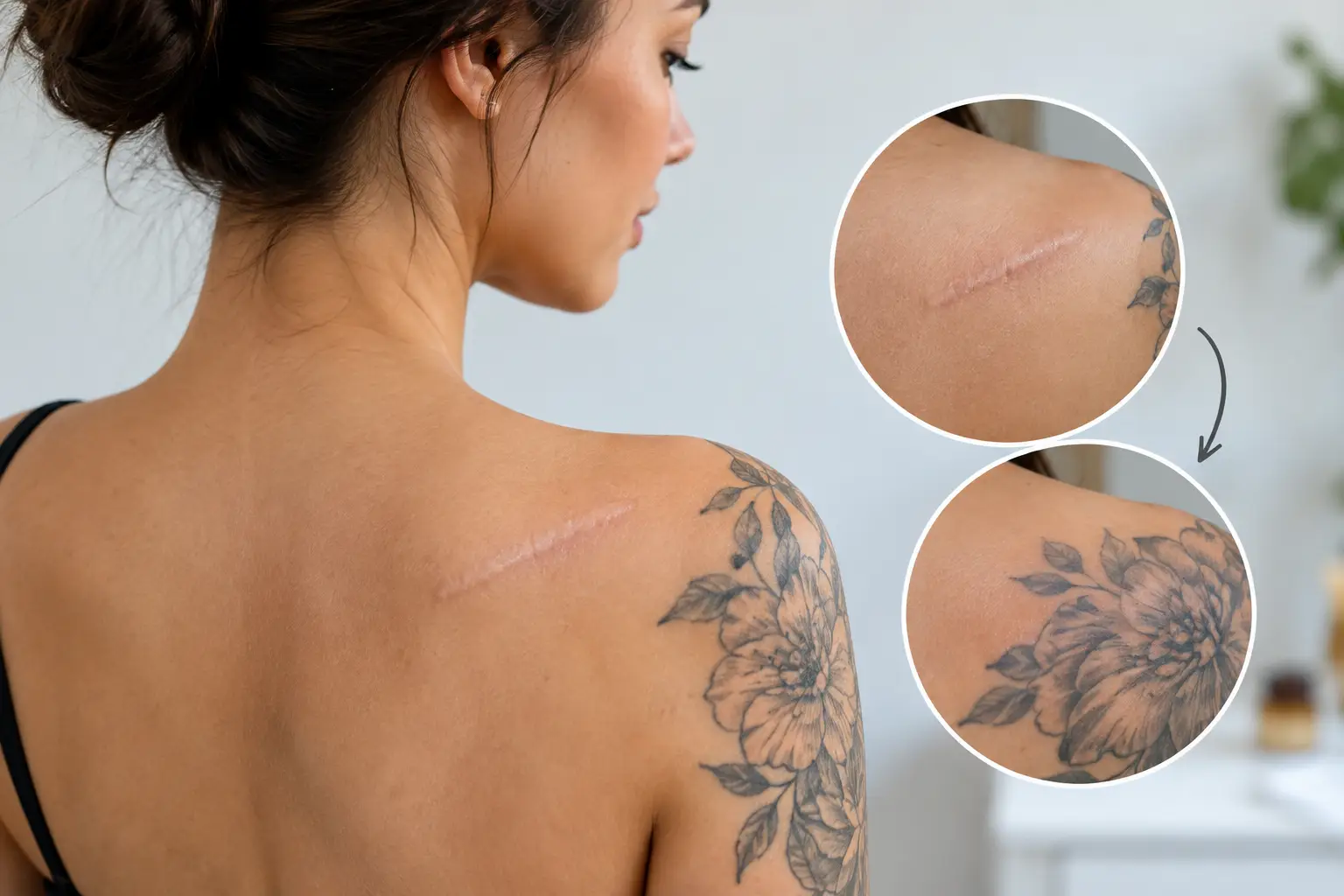
A scar can carry a story you do not always want to explain. It may be the fine line left after surgery, a pale patch following an injury, or a burn scar that catches the eye before you feel ready. A scar camouflage tattoo is designed to reduce that visual contrast by carefully blending pigment into the surrounding skin tone. The goal is not to erase a scar or make a promise that skin can look untouched. It is to help the area appear softer, more balanced and less immediately noticeable.
For many clients, this can be a meaningful confidence-restoring option. However, successful results depend on much more than choosing a close colour. Scar maturity, texture, skin sensitivity, healing history and the location of the scar all shape what treatment can achieve.
What is a scar camouflage tattoo?
Scar camouflage is a form of paramedical tattooing. Specialised pigments are custom blended and implanted into the scar tissue to reduce the difference in colour between the scar and the healthy skin around it. It is often considered for scars that are lighter than the surrounding skin, including surgical scars, injury scars, burn scars and some stable stretch marks.
Unlike decorative tattooing, the approach is highly controlled. Scar tissue can be thinner, firmer, uneven or less predictable than unaffected skin. It may also retain pigment differently. A skilled practitioner adjusts needle depth, technique and pigment selection to respect these changes in the skin.
The best result is usually understated. Rather than creating a perfectly flat, uniform block of colour, the practitioner works towards a gradual blend that looks natural at everyday viewing distance. Skin has variation, warmth and undertones, so a single off-the-shelf shade rarely produces a convincing result.
When scar camouflage tattooing may be suitable
Timing matters. A scar generally needs to be fully healed and stable before pigment camouflage is considered. In many cases, that means waiting at least 12 months after the original injury or surgery, although some scars take longer to mature. A suitable scar is usually closed, no longer red or actively inflamed, and not continuing to change in shape or texture.
A consultation is essential because not every scar is ready for tattooing. Raised, keloid or actively hypertrophic scars may require a different treatment pathway first. If a scar is very indented, tethered, thick or shiny, colour correction alone may not be the most effective first step. Pigment can reduce contrast, but it cannot fully remove a deep shadow or reshape the surface of the skin.
For this reason, the strongest treatment plans often begin with texture support. Depending on the scar and your skin, this may include inkless scar revision, regenerative skin therapies or other advanced skin correction options intended to support collagen and soften the transition between scar tissue and healthy skin. Once the texture has improved and the skin is stable, pigment camouflage may create a more natural-looking finish.
Scars that need extra care
Some situations call for medical clearance or a more cautious approach. This includes scars following cancer treatment, scars affected by radiation, areas with reduced sensation, a history of keloid formation, autoimmune skin conditions, uncontrolled diabetes, active infection or a tendency to poor wound healing. Pregnancy, certain medications and recent skin treatments can also affect treatment timing.
A responsible practitioner will not treat around these considerations. They will ask about your health history, examine the scar and explain whether a patch test, a staged plan or a referral back to your doctor is appropriate.
The consultation: where natural results begin
A scar camouflage tattoo should never be selected from a colour chart in a rushed appointment. Your skin tone can change between the face, chest, abdomen, arms and legs. It also responds differently through the seasons, after sun exposure and as your natural pigmentation changes over time.
During a detailed consultation, the practitioner assesses the scar’s age, depth, shape, colour and texture. They also look at the surrounding skin in natural light, discuss your past healing experience and ask what you would like to feel more comfortable wearing or doing after treatment. For one person, that may be feeling less self-conscious in swimwear. For another, it may be no longer reaching for clothing that conceals a scar at work or social events.
Pigment matching considers more than lightness or darkness. Undertones can be pink, golden, olive, neutral or cool, and scar tissue may heal with a different cast than the surrounding skin. Medical-grade pigments are blended specifically for the area, then placed gradually. It is common to begin conservatively because pigment can settle differently as the skin heals.
At Scarless Artistry, treatment planning is consultation-led, with a focus on realistic outcomes, sterile processes and carefully structured aftercare. This individual approach matters because there is no universal formula for camouflage work.
What happens during treatment?
The treatment area is cleansed and prepared before the pigment work begins. Many clients describe the sensation as manageable, although comfort levels vary according to the scar location, tissue sensitivity and individual pain threshold. Some scar tissue has reduced sensation, while other areas can feel more sensitive than ordinary skin.
The practitioner builds colour in fine layers rather than attempting to achieve the final result in one pass. This gentle technique helps avoid overworking delicate tissue and allows the skin to respond more predictably. The appointment length varies with the size, complexity and position of the scar.
Most clients need more than one session. A small, stable scar with minimal texture change may need fewer appointments, while a larger scar or an area with uneven pigment retention may need a staged series. Sessions are spaced apart to allow complete healing and an accurate assessment of how the pigment has settled.
Healing after scar camouflage tattooing
The area may look darker, warmer or more noticeable immediately after treatment. This is normal and temporary. As the skin heals, the pigment softens and the final tone becomes clearer. Mild redness, tenderness, dryness or fine flaking can occur in the first days.
Aftercare protects both the skin and the developing result. Your practitioner will provide personalised instructions, but clients are commonly asked to keep the area clean, avoid picking or scratching, and protect it from heat, friction, swimming and direct sun while it heals. Avoid introducing unapproved creams, exfoliants or active skincare products to the area, as these can interfere with recovery.
Sun protection remains important long after the initial healing period. Tanned surrounding skin can make a camouflaged scar appear lighter by comparison, while ultraviolet exposure can contribute to pigment changes in both the scar and healthy skin.
How long does it last?
A scar camouflage tattoo is considered long-lasting, but it is not necessarily permanent in appearance. Skin naturally changes, scars continue to mature and pigment may fade or shift subtly over time. Your natural skin tone may also change with sun exposure, hormonal changes and ageing.
Some clients choose a colour refresh after several years. Others are happy with the result for much longer. The right expectation is not a fixed timeline, but ongoing care and the option of maintenance if the colour contrast becomes more noticeable again.
What a scar camouflage tattoo cannot do
This treatment can be transformative for the right scar, but honest expectations are part of quality care. Camouflage tattooing cannot remove scar tissue, fully flatten a raised scar, fill a deep depression or restore normal skin texture. It does not treat an active skin condition, and it is not suitable for every area or every skin type without assessment.
The result can also look different in changing light. A scar may appear beautifully blended indoors but be slightly more visible in strong daylight, when skin texture and natural undertones are easier to see. This does not mean treatment has failed. It reflects the fact that skin is living tissue, not a painted surface.
For scars with both colour and texture concerns, combining treatments in the right order can offer a more balanced improvement than pigment alone. Patience is part of the process, particularly when the skin needs time to recover between sessions.
Choosing a specialist matters
The quality of scar camouflage work rests on technical skill, pigment knowledge and sound judgement about when not to proceed. A specialist should be able to explain the likely number of sessions, the limits of treatment, possible healing variations and the aftercare required for your particular scar.
Ask to see healed work where possible, not only immediate after photos. Make sure you feel comfortable discussing your medical history and that the practitioner gives you time to consider the plan. A consultation should leave you informed, not pressured.
If a visible scar has been affecting how you dress, move through social settings or feel in your own skin, you deserve a treatment plan that sees more than the scar itself. The right next step is a thoughtful assessment of what your skin needs, what improvement is realistic and what would help you feel more at ease in it.