Nue Strand treatment for thinning hair in Sydney
Hair thinning can feel deeply personal, whether it shows as a widening part, more visible scalp at the crown, or hair that no longer feels as full as it once did. A Nue Strand treatment is designed to support scalp health and healthier-looking hair through a tailored, non-surgical approach that begins with understanding what your scalp and hair actually need.
At Scarless Artistry, hair and scalp concerns are approached with the same care given to visible skin concerns: no generic promises, no rushed treatment plan, and no assumption that one method suits everyone. Your hair density, scalp condition, sensitivity, lifestyle, medical history and goals all matter when deciding whether this treatment is appropriate.
What is a Nue Strand treatment?
Nue Strand is a professional hair and scalp treatment designed to support the environment in which hair grows. Rather than disguising thinning with a cosmetic cover-up, the treatment focuses on conditioning the scalp and supporting the appearance of stronger, healthier hair over time.
The precise treatment protocol should always be individualised. Some clients may be concerned about early diffuse thinning, while others are managing a dry, congested or sensitive scalp that is affecting how their hair looks and feels. A considered assessment helps determine whether Nue Strand is a suitable standalone option or whether it may be best used as part of a broader scalp-care plan.
It is not an instant hair replacement treatment, and it cannot guarantee regrowth where follicles are no longer active. That distinction matters. The most valuable outcome is an honest plan that supports your scalp, respects your hair’s natural growth cycle and sets realistic expectations from the beginning.
Why scalp health matters when hair looks thinner
Healthy-looking hair begins at the scalp. When the scalp is irritated, excessively dry, oily, congested or reactive, hair can appear flatter, less lustrous and more fragile. In some cases, shedding may be related to stress, hormonal change, illness, nutritional factors, medications or a diagnosed scalp condition. In others, there may be a hereditary pattern of thinning.
A treatment can support the scalp environment, but it should not replace medical assessment when there are warning signs. Sudden hair loss, patchy bald areas, itching, pain, scaling, inflammation or a rapid change in density should be discussed with your GP or dermatologist first. Identifying an underlying cause is an important part of caring for your long-term hair and scalp health.
For clients who have already ruled out medical concerns, or who are managing thinning alongside professional medical advice, a tailored scalp treatment may be a practical way to improve the condition and appearance of the hair over time.
The value of a personalised assessment
Thinning hair is not one concern with one solution. Hair can look sparse because individual strands are becoming finer, because shedding has increased, because density has changed after pregnancy or menopause, or because breakage is preventing length and fullness. The scalp may also be sensitive after colouring, heat styling, stress or the use of unsuitable products.
Before recommending a Nue Strand treatment, a practitioner should look at the pattern of thinning, the visible scalp condition, your sensitivity history and what you hope to achieve. This helps avoid unnecessary treatments and creates a more measured plan. For one person, the priority may be scalp comfort and hydration. For another, it may be improving the appearance of density and supporting a more consistent home-care routine.
What to expect during treatment
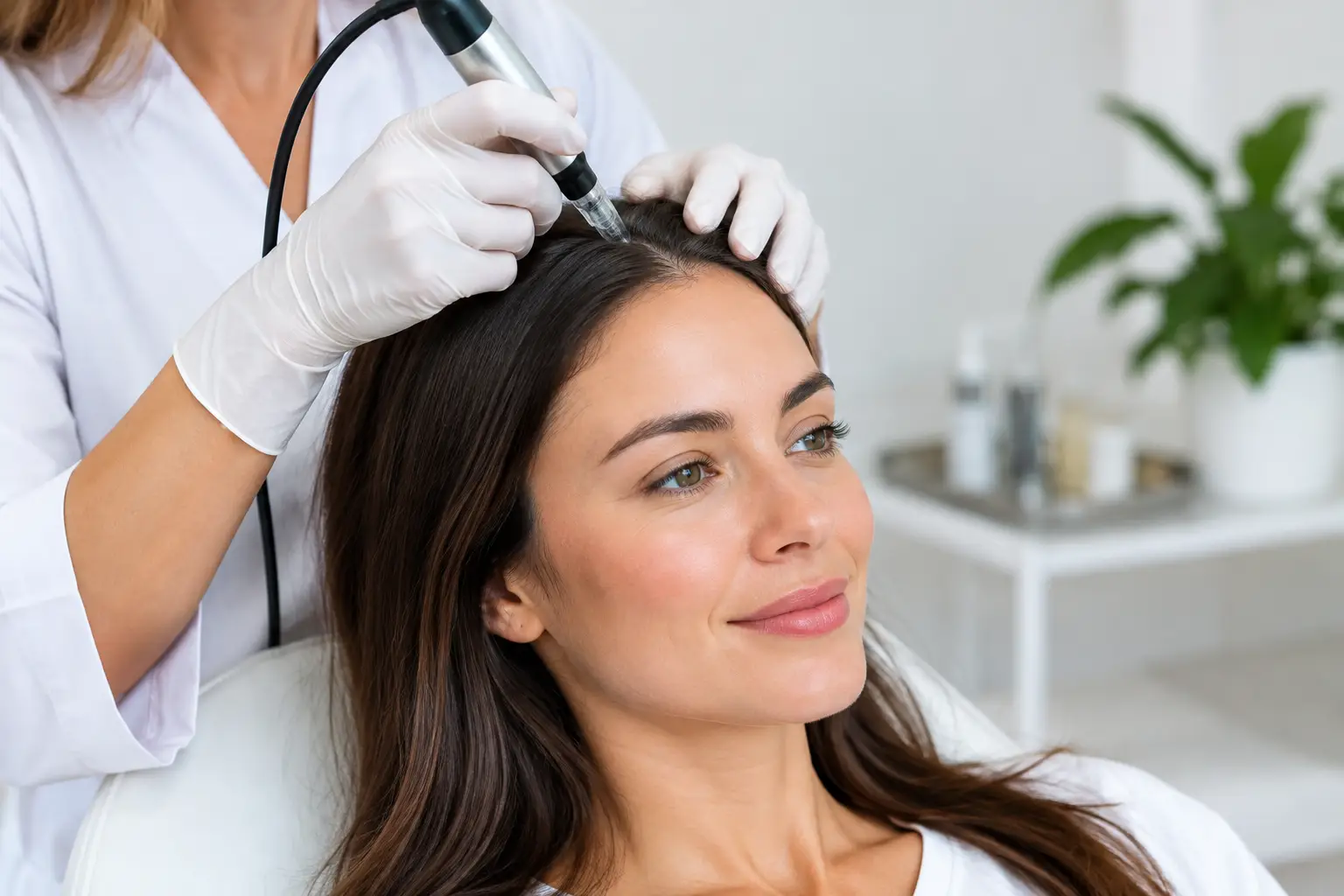
A professional Nue Strand appointment is typically comfortable and non-surgical. Your practitioner will discuss your concerns, assess the scalp and explain the proposed protocol before treatment begins. The experience should feel calm and considered, particularly if you are already feeling self-conscious about thinning hair.
Treatment plans vary because the pace of change varies. Hair growth is cyclical, and visible improvements in hair quality or scalp condition are usually gradual rather than immediate. A series of appointments may be recommended, with timing based on your starting point, response to treatment and broader hair goals.
During your consultation, it is reasonable to ask what the treatment involves, how many sessions may be appropriate, what you may notice between appointments and what aftercare is required. Clear answers are part of safe, client-centred care.
Results are individual, not guaranteed
Hair treatments are often marketed with dramatic claims, which can make it hard to know what is realistic. A responsible treatment plan should never promise that every client will regrow a particular amount of hair or achieve a certain density by a fixed date.
Some clients notice that their scalp feels more balanced and their hair appears healthier, softer or easier to manage as their treatment plan progresses. Others may see gradual changes in the appearance of fullness, particularly when a healthier scalp routine is paired with suitable home care. How much improvement is possible depends on factors such as the cause and duration of thinning, follicle activity, age, hormones, stress, medication and consistency with aftercare.
If there is no meaningful response after an appropriate period, the plan should be reviewed rather than simply continued. Sometimes a different approach, a medical referral or cosmetic scalp camouflage may be more suitable for your needs.
Preparing for your appointment and caring for your scalp
Arrive with a clean scalp unless your practitioner advises otherwise. Let them know about recent colouring, chemical services, extensions, new products, allergies, scalp sensitivity and any medications or medical conditions that may affect treatment. This information helps protect both your comfort and your result.
Aftercare will depend on the protocol used, but gentle scalp care is usually central. Avoid introducing multiple new products at once, as this makes it harder to identify what your scalp tolerates well. Use recommended products as directed, minimise unnecessary heat and chemical stress, and give your scalp time to settle between treatments.
Lifestyle factors also have a place in the conversation. Sleep, stress, nutrition and general health can influence shedding and hair quality. No topical or in-clinic treatment can fully compensate for an untreated underlying health concern, which is why a whole-person view is more useful than a quick fix.
Is Nue Strand right for you?
A Nue Strand treatment may suit people who are noticing early thinning, reduced fullness, changes in hair quality or ongoing scalp concerns and who want a gentle, professional treatment plan. It can be particularly appealing for clients seeking a non-invasive option before considering more intensive interventions.
It may not be the first step for everyone. If your hair loss is sudden, extensive, patchy or accompanied by scalp pain or inflammation, medical review should come first. Similarly, if your primary goal is to conceal an established area of hair loss immediately, other cosmetic solutions may be worth discussing alongside scalp-focused care.
The right recommendation is the one that matches your diagnosis, budget, comfort level and expectations. A free consultation or virtual assessment can provide clarity without pressure, helping you understand whether a personalised Nue Strand plan is likely to be worthwhile.
Hair changes can affect confidence long before anyone else notices them. Taking the time to assess your scalp properly, ask informed questions and choose a measured treatment plan is a positive first step towards feeling more comfortable in your hair again.