
How Scars Respond to Needling Over Time
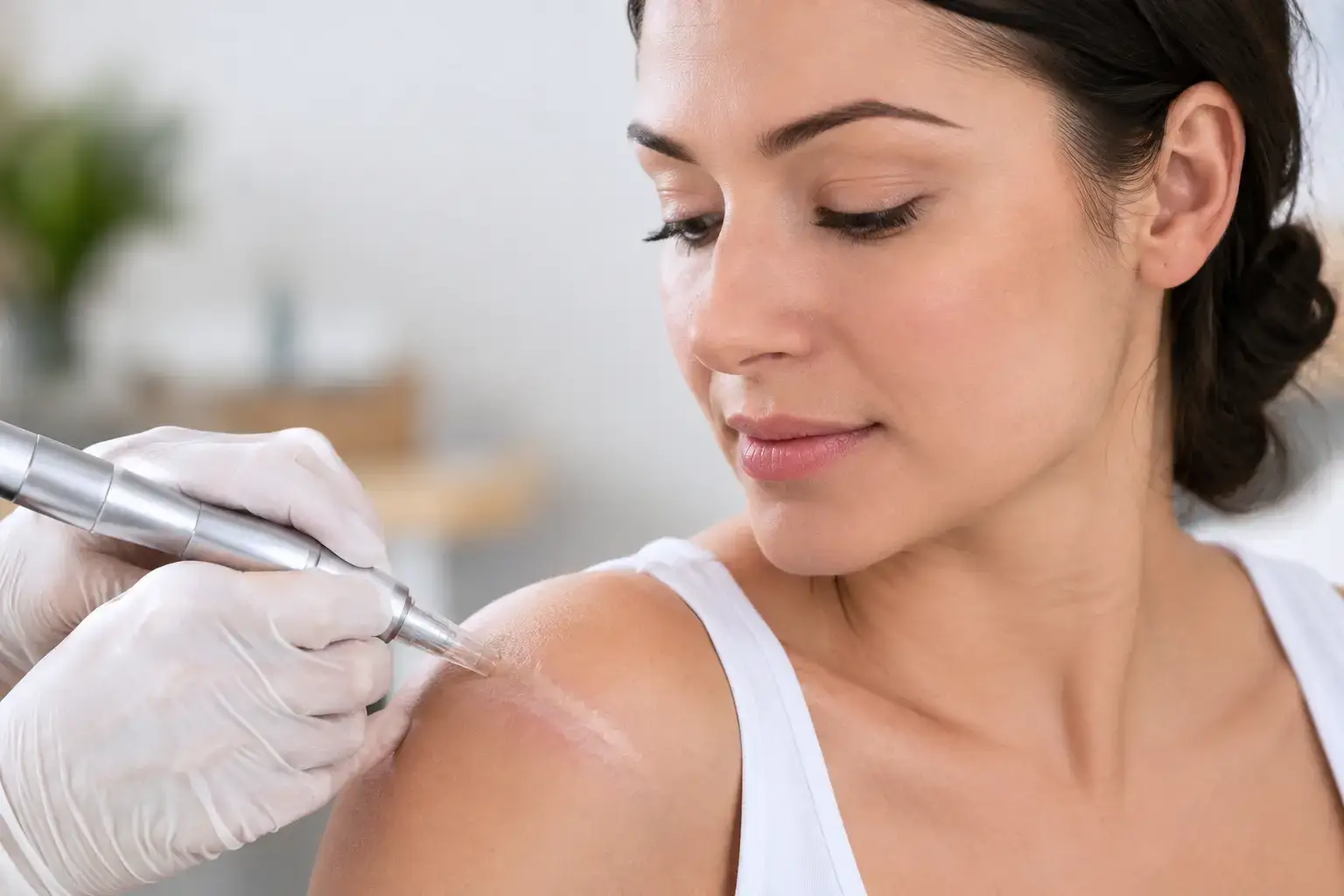
A scar can feel like a fixed part of the skin, but scar tissue is not inactive. It continues to remodel, respond to stimulation and change with time. Understanding how scars respond to needling can help you make a more informed decision about whether this treatment may suit your skin, your scar type and your goals.
Needling is often considered for scars that feel uneven, indented, tight or visibly different in texture from the surrounding skin. It is not a quick fix, and it does not erase a scar. When performed at the right stage of healing and with an individualised plan, however, it can support collagen renewal, soften the transition between scarred and healthy skin, and improve the way the area looks and feels.
How scars respond to needling treatment
Needling, also known as microneedling or collagen induction therapy, uses fine needles to create controlled micro-channels in the skin. This measured stimulation signals the body to begin a repair response. Blood flow increases, inflammatory cells move into the area, and the skin starts producing fresh collagen and elastin as it heals.
Scar tissue behaves differently from uninjured skin. It may have reduced elasticity, an irregular collagen structure, altered sensation, or less even pigment. With professional needling, the aim is to encourage more organised collagen remodelling over a series of treatments. In practical terms, this may help a scar feel softer, look less sharply defined, and blend more naturally into the surrounding skin.
The response is gradual. Some clients notice temporary redness and a fresher appearance soon after treatment, but meaningful texture changes develop as collagen remodels over the following weeks and months. For this reason, treatment plans are commonly spaced apart to give the skin time to recover and respond.
What changes may be possible
The result depends on the scar itself. A pitted acne scar, a surgical scar and a stretch mark may all respond to needling differently because they have different depths, patterns and healing histories.
Indented scars can sometimes become less pronounced as new collagen support develops beneath the surface. Surgical scars may become softer at the edges and less texturally distinct. Stretch marks may respond with improved texture and a more even-looking surface, particularly when treatment is planned around their age, colour and skin condition.
Needling can also be valuable where a scar feels firm or tethered. By carefully stimulating the area, treatment may support flexibility and reduce the abrupt contrast between the scar and nearby skin. It is usually most effective when expectations are focused on visible improvement rather than complete removal.
Colour is a separate consideration. Needling may improve texture, but it does not reliably restore missing pigment or fully correct colour differences in scars. Once the skin is stable and the texture has improved as much as possible, pigment-based scar camouflage may be considered for suitable clients to create a more even colour match.
The healing stages after needling
Immediately after needling, the treated area may appear red, warm or mildly swollen. This is a normal short-term inflammatory response. Depending on the treatment area, skin sensitivity and depth used, redness may settle within a day or continue for several days.
In the days that follow, the skin may feel dry, tight or slightly rough. Light flaking can occur. This does not mean the scar is worsening. It is part of the surface recovery process while deeper collagen remodelling continues beneath the skin.
Over the next several weeks, the repair phase becomes less visible but remains important. The body reorganises collagen fibres and gradually strengthens the treated tissue. This is why taking progress photographs too early can be misleading. A fair assessment is usually made after the skin has had adequate time to complete each healing cycle.
Avoiding unnecessary irritation during recovery matters. Sun exposure, active skincare ingredients, excessive heat, swimming too soon and picking at flaking skin can disrupt healing or increase the risk of post-inflammatory pigmentation changes. Your aftercare should be tailored to the treatment area, your skin sensitivity and the method used.
Why scar age and type matter
A mature scar is not automatically a better candidate, and a newer scar is not automatically unsuitable. Timing depends on whether the scar has fully closed, settled and completed its early healing phase. Treating a scar that is still actively inflamed, raised, painful or changing quickly may not be appropriate.
Flat, pale surgical scars and older atrophic scars are often assessed differently from raised hypertrophic scars or keloid-prone scars. Raised scars need particular caution because additional stimulation can be unsuitable for skin that has a history of producing excess scar tissue. Clients with a personal or family history of keloids should disclose this during consultation.
Scar location also matters. A scar on the chest, shoulder, jawline or joint may behave differently from one on the abdomen or thigh. Areas exposed to regular movement, friction or sun may need more conservative treatment and attentive aftercare.
When needling may not be the first step
Needling is not suitable for every scar or every stage of skin health. Active infection, open skin, active inflammatory acne in the treatment area, unexplained rashes and certain medical conditions may require treatment to be delayed. Some medications, recent procedures and a tendency towards abnormal scarring can also influence whether it is appropriate.
For scars with strong colour contrast, needling alone may not address the main concern. For example, a flat scar that is texturally smooth but much lighter than the surrounding skin may benefit more from a carefully considered camouflage approach once it is stable. Conversely, a scar with uneven texture may need regenerative skin support before pigment is introduced.
The best approach is often a staged one. Skin condition and texture are assessed first, then treatment can be adjusted as the scar responds. This protects the skin from being overtreated and keeps the focus on a natural-looking result.
What a personalised needling plan should consider
A meaningful consultation goes beyond identifying a scar as old or new. It should consider the scar’s cause, depth, location, colour, sensitivity and previous healing behaviour. Your practitioner should also ask about past treatments, relevant health history, skincare use, sun exposure and your desired outcome.
At Scarless Artistry, this assessment guides whether needling is appropriate, how conservatively treatment should begin, and whether another advanced skin correction option may better support your goal. Some clients need a series of sessions, while others may benefit from a different modality or from combining texture support with colour correction at a later stage.
The treatment itself should be performed with sterile processes, appropriate needle depth and a measured technique. More aggressive is not always better. Over-treatment can prolong redness, compromise the skin barrier and create unwanted pigment changes, particularly in sensitive or melanated skin.
Setting realistic expectations for scar revision
The most satisfying scar revision results usually come from clear expectations and patient progress. Needling can support softer texture, improved collagen quality and a less noticeable scar appearance, but each person’s healing response is unique. The number of sessions required cannot be predicted accurately from a photo alone.
A scar may improve in one area before another, and changes can be subtle from one appointment to the next. Looking at progress over months, rather than days, provides a more realistic picture of treatment value. Consistent aftercare and protection from UV exposure also play a significant role in preserving the result.
If a scar has affected the way you dress, move through social settings or feel in your own skin, it deserves more than a one-size-fits-all solution. A professional assessment can clarify whether needling is the right starting point and create a gentle, structured path towards skin that feels more like your own.