What to Expect From Burn Scar Colour Correction
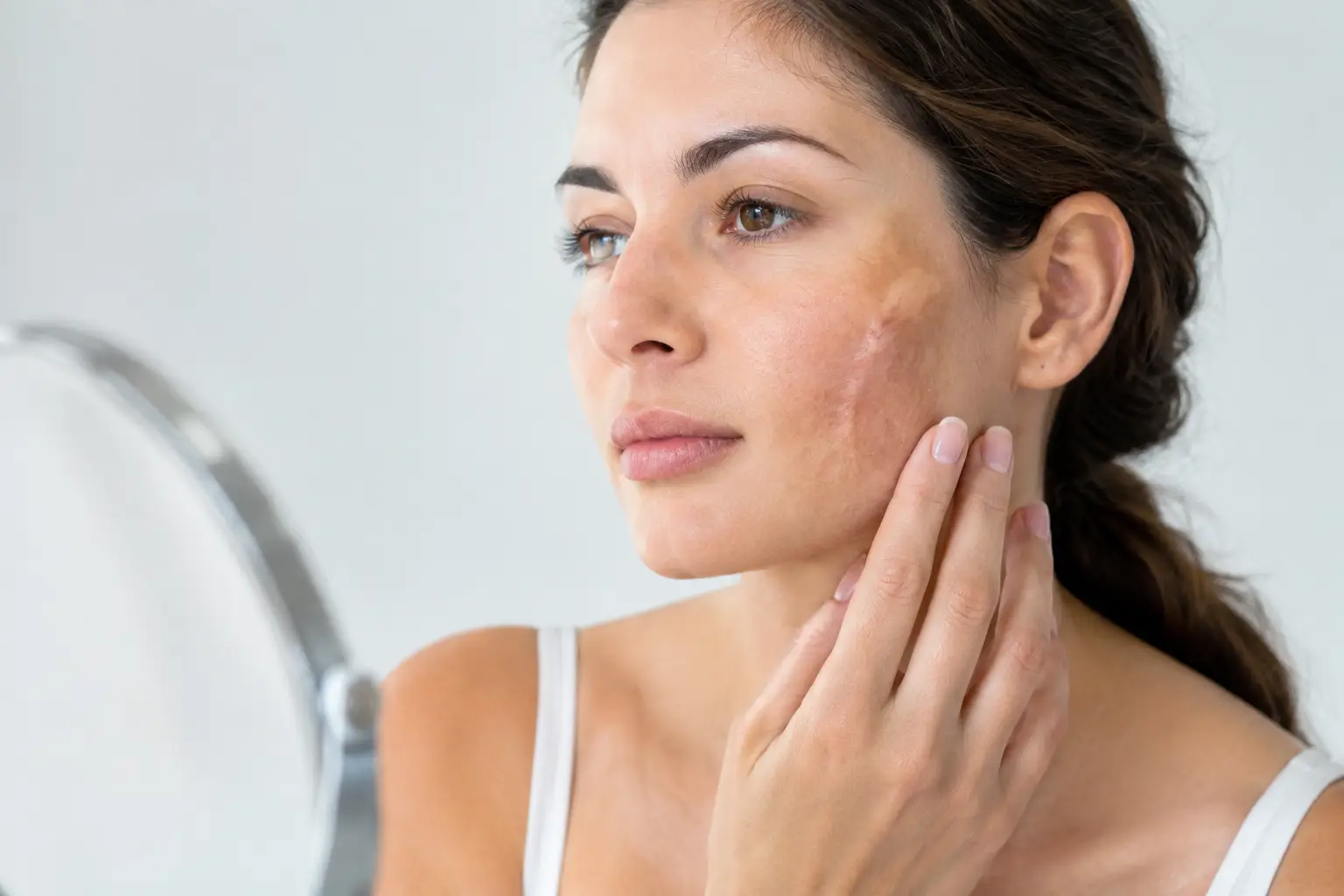
A burn scar can be fully healed and still draw attention because its colour does not blend with the surrounding skin. It may appear lighter, darker, redder, pinker or uneven in several ways at once. Burn scar colour correction is designed to reduce that visible contrast with a carefully planned approach to pigment, skin health and scar behaviour – not a one-size-fits-all shade match.
For many people, the concern is not simply the scar itself. It is the hesitation before wearing short sleeves, going to the beach, attending a meeting or being photographed. Colour correction cannot erase a scar or recreate untouched skin, but when it is appropriate, it can make the area look more balanced and less immediately noticeable.
Why burn scars can change colour
Burn injuries affect the skin at different depths, so no two scars heal in exactly the same way. Some areas lose pigment and look pale or white. Others develop excess pigment and heal darker than the surrounding skin. Red, pink or purple tones can remain while blood vessels are still active, particularly in newer scars.
Scar tissue also reflects light differently. Even if a scar is close in colour to the surrounding skin, a raised, shiny, tight or indented texture may make the difference more visible. This is why a colour-only solution is not always the right first step.
A specialist assessment considers the scar’s age, depth, location, stability, sensitivity and healing history. Your natural skin tone, sun exposure, medications and tendency towards pigmentation changes also matter. These details help determine whether pigment camouflage, skin revision therapies, medical-grade healing support or a staged combination is the safest and most useful approach.
When burn scar colour correction may be suitable
The best candidates are usually scars that are fully healed and stable. A scar that is still changing in colour, frequently irritated, tender, actively red or prone to breakdown needs more time or a different treatment focus. In many cases, the skin must first be supported to settle before any pigment is introduced.
Mature scars are often easier to assess because their behaviour is more predictable. However, maturity is not based on a calendar alone. A burn scar may take many months or longer to stabilise, depending on the injury, treatment received, grafting, infection history and individual healing response.
During a consultation, it is important to discuss whether you have had hypertrophic scarring, keloid scarring, allergic reactions, autoimmune conditions or changes in sensation around the scar. These factors do not automatically rule out treatment, but they can affect the technique, timing and aftercare plan.
Colour matching is more detailed than choosing one pigment
Natural skin is not one flat colour. It has undertones, warmth, depth and subtle variation across the body. A pigment that looks right in a treatment room may appear different in daylight, after healing or when the surrounding skin tans.
For this reason, paramedical camouflage is a process of custom blending rather than applying a standard beige or brown. A specialist may work gradually, building colour in layers across more than one session. The aim is not to make the scar disappear under a heavy block of pigment. It is to soften the boundary between scar tissue and healthy skin for a natural-looking result.
Test areas can be valuable, especially for deeper skin tones, sensitive scar tissue or scars with unusual undertones. They provide information about how the skin accepts and heals the pigment before a larger area is treated.
Texture and colour often need to be treated together
Pigment camouflage can improve visual uniformity, but it does not flatten a raised scar, release tight tissue or fill a deep indentation. Where texture is a key concern, advanced skin correction may be recommended before, alongside or instead of colour work.
Treatments such as inkless scar revision may be used to support collagen activity and soften the appearance of certain scars. LED light therapy and cold plasma therapy may also form part of a personalised plan where appropriate, with the goal of supporting skin recovery, comfort and tissue quality. The sequence matters. Working on texture first can create a more even surface for later pigment placement and a more convincing final result.
There are trade-offs to consider. A person whose main concern is a pale, flat, stable scar may be ready for pigment-focused treatment sooner than someone with a thick, red or contracted scar. In the second situation, attempting camouflage too early may produce an uneven result or place stress on skin that is not yet ready.
What happens during treatment
A colour correction appointment begins with a review of the treatment plan, the scar’s current condition and any changes since your consultation. The skin is prepared using sterile processes, and pigment is selected or adjusted to suit the area being treated.
Pigment is implanted with a gentle paramedical tattooing technique. The sensation varies considerably. Some burn scars have reduced sensation, while others remain very sensitive. The treatment can be adjusted to the individual, with a focus on comfort and careful skin handling.
The treated area often looks stronger or warmer immediately after the appointment. This is not the final colour. Healing, mild redness and pigment settling all influence the early appearance. Once the skin has recovered, the true tone can be assessed and refined if needed.
Most clients should expect a series of sessions rather than a single appointment. The number depends on scar size, colour difference, skin response and the complexity of the match. Building pigment conservatively gives greater control than trying to achieve full coverage in one treatment.
Healing and aftercare influence the result
Aftercare is part of the treatment, not an afterthought. The area needs to be kept clean, protected from friction and left to heal without picking or exfoliating. Direct sun exposure can alter both scar tissue and pigment, so consistent sun protection is particularly important once the skin has healed.
Your practitioner will provide specific instructions based on the treatment area and method used. It is also sensible to allow enough time before a holiday, swimming, intense exercise or an event where the area may be exposed. Rushing healing for a particular date rarely serves the skin well.
Pigment longevity varies. Some clients may need a future touch-up as the skin naturally renews, the body site is exposed to sun or the surrounding skin changes over time. A touch-up is not necessarily a sign that something has gone wrong. It can be a normal part of maintaining a subtle, well-blended result.
Setting realistic expectations for burn scar camouflage
The most successful outcomes tend to be the ones built on clear expectations. Burn scar colour correction can reduce contrast and help clothing choices, social situations and everyday visibility feel easier. It cannot promise identical skin, remove all textural differences or guarantee that colour will remain unchanged forever.
A responsible practitioner will be honest if treatment is unlikely to achieve the result you want. For example, unstable pigmentation, very active redness, significant scar contraction or highly uneven texture may require a different approach first. Your safety and the long-term appearance of the skin are more valuable than a quick cosmetic fix.
At Scarless Artistry, treatment planning is consultation-led because burn scars deserve that level of care. A detailed in-person or virtual assessment can clarify what is realistic, whether a test patch is advisable and how each stage of treatment may support a more even, natural-looking result.
The right next step is not to cover a burn scar as quickly as possible. It is to understand what your skin needs now, give it the time and support to respond well, and choose a plan that helps you feel more comfortable in it.