
Best Pigment Options for Vitiligo in Sydney
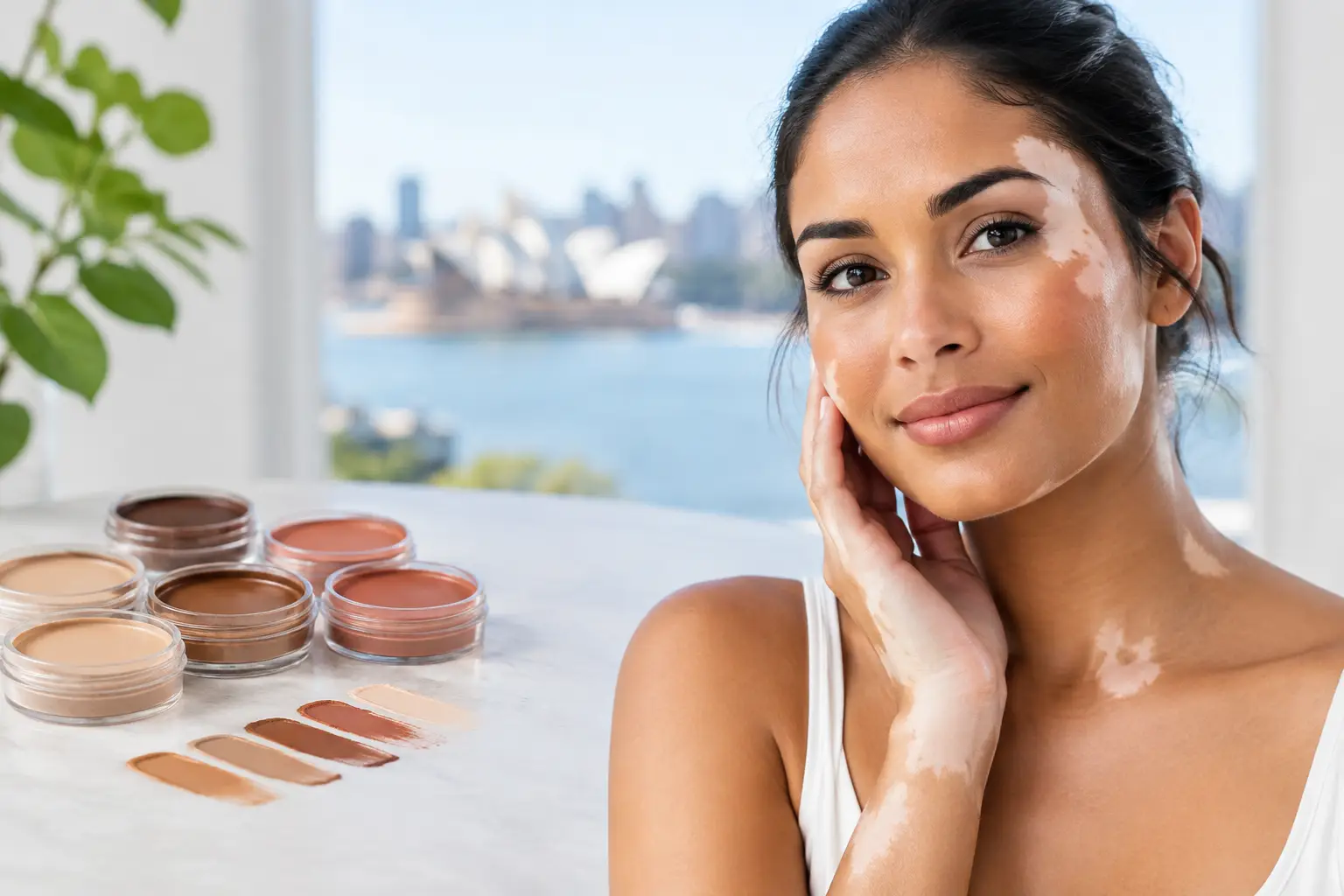
For many people, the most difficult part of vitiligo is not the condition itself, but the contrast it creates in visible areas such as the face, hands, neck or chest. Choosing the best pigment options for vitiligo is therefore about more than covering a lighter patch. It is about respecting sensitive skin, assessing whether the condition is stable, and finding a colour solution that looks believable in daylight as well as in photos.
Pigment camouflage can be a meaningful confidence-restoring option, but no single product or treatment is right for every person. The most suitable approach depends on your natural skin tone, the location and size of the patch, how your skin heals, whether vitiligo is active, and the level of maintenance you are comfortable with.
What makes a pigment option right for vitiligo?
Vitiligo causes areas of skin to lose melanin, the pigment responsible for natural skin colour. Because surrounding skin can change with sun exposure, seasons, hormonal changes and ageing, colour matching requires a considered approach. A shade that appears ideal on the day of treatment may need to be assessed against the skin’s undertone and its likely changes over time.
A professional assessment should consider more than the visible colour difference. Skin texture, sensitivity, healing history, medications and any history of keloid scarring can all influence whether a pigment-based treatment is appropriate. For people with vitiligo, disease stability is particularly important. If new patches are appearing or existing patches are spreading, a permanent or semi-permanent camouflage treatment may not deliver predictable long-term uniformity.
The goal is not to create an opaque, flat block of colour. The most natural results come from carefully layered pigment, customised undertones and a technique that softens the transition between treated and untreated skin.
Best pigment options for vitiligo: a practical comparison
Cosmetic camouflage makeup
High-coverage cosmetic camouflage is often the most flexible place to begin. Specialised creams and body foundations can reduce visible contrast for a day, an event, work or social occasions. They are especially useful when patches are changing, when you are exploring colour preferences, or when you want coverage without committing to a procedure.
The trade-off is maintenance. Even water-resistant formulations may transfer with friction, require careful removal, or need reapplication after swimming and exercise. Matching can also take practice, particularly where the face, hands or neck have several different undertones.
A practitioner can help identify whether a warmer, cooler, olive, golden or neutral base will blend more naturally. This is often more useful than simply choosing the closest shade by eye.
Gradual tanning products and self-tanner
For some people, a gradual tanning lotion or professionally applied self-tanner can lessen the contrast between vitiligo patches and surrounding skin. These products stain the outer layer of the skin rather than restoring melanin, so results are temporary and need regular upkeep.
Self-tanner may work well across larger body areas where a gentle overall bronzing effect is preferred. However, vitiligo skin may take colour differently from surrounding skin. Patch testing is sensible, and application should be methodical to avoid darker edges or uneven development.
This option is not usually ideal when someone wants highly precise coverage on small, intricate facial areas. It can also become challenging through summer, when untreated skin naturally tans while vitiligo patches do not.
Semi-permanent medical tattooing
Vitiligo medical tattooing, also called micropigmentation or medical camouflage tattooing, places carefully selected pigment into the skin to reduce the visible difference between lighter patches and the surrounding complexion. For stable vitiligo, it can offer longer-lasting camouflage without the daily routine of makeup.
This is not a standard cosmetic tattoo service. It requires detailed colour formulation, conservative pigment placement and an understanding of how skin heals. A patch test and small-area trial may be recommended before treating a larger region. The treated area initially appears stronger in colour, then softens as healing progresses, so final colour is judged only after the skin has settled.
Medical tattooing tends to suit defined, stable patches where the surrounding skin tone is reasonably consistent. Areas such as the lips, face, hands and chest may each require a different strategy because they experience different levels of movement, sun exposure and colour variation.
The trade-off is that no implanted pigment stays identical forever. Skin turnover, UV exposure and the body’s natural response to pigment can gradually alter the result. Touch-up sessions may be needed, and future changes in your natural skin tone can affect how closely the camouflage continues to match.
Colour correction before concealment
Not every patch needs a skin-tone pigment alone. In some cases, colour correction makes topical camouflage appear more convincing. For example, a subtle peach, apricot or warm neutral correcting layer can balance an area that reads greyish or cool before a skin-tone product is applied.
This is typically a makeup-based technique rather than a substitute for medical tattooing. It can be particularly helpful for clients who have a strong contrast in photographs or under office lighting but prefer a non-procedural option.
When medical tattooing may not be the first choice
A careful practitioner will sometimes advise waiting. If vitiligo is active, new depigmented areas may emerge around an existing treated patch, creating a new contrast. Some people with vitiligo can also experience the Koebner phenomenon, where skin trauma contributes to new lesions in susceptible individuals. While this does not occur for everyone, it is a relevant consideration before any needle-based procedure.
Medical tattooing should also be postponed if the skin is irritated, sunburnt, infected or healing from another procedure. If you are undergoing dermatological treatment for vitiligo, the timing of camouflage work should be discussed with your treating doctor or dermatologist.
Camouflage tattooing does not treat the cause of vitiligo, stop its progression or restore the skin’s own melanin production. Its purpose is aesthetic: to reduce contrast and help the area blend more naturally with the surrounding complexion.
Why pigment matching is more complex than choosing one shade
Human skin is rarely one colour. The face alone may contain warmer tones through the forehead and cheeks, cooler tones around the jaw, and natural redness or shadow in areas of movement. A pigment selected solely from a colour chart can look noticeably different once it is placed in the skin.
Professional matching considers the skin’s surface colour, underlying undertone and the way pigment is expected to heal. Small variations in depth, dilution and layering can influence the final result. For this reason, a good treatment plan may involve more than one session rather than trying to achieve full coverage in a single appointment.
At Scarless Artistry, vitiligo camouflage planning is consultation-led, with attention given to pigment suitability, skin sensitivity, healing behaviour and realistic long-term expectations. This measured process is designed to prioritise a natural outcome over a quick colour match.
Preparing for a vitiligo pigment consultation
Bring clear information about your vitiligo history, including when the patch first appeared, whether it has changed recently and any current treatment you are receiving. It is also useful to arrive without heavy makeup on the area where possible, so your natural complexion can be accurately assessed.
Photographs can help document colour before treatment and track healing between sessions. A practitioner may also ask about allergies, medical conditions, medications, previous tattoos, cosmetic procedures and your tendency to scar or develop post-inflammatory pigment changes.
During the consultation, ask what result is realistic for your specific patch, how many sessions may be required, whether a test area is advised, and what aftercare will protect the healing skin. You should also understand that sun protection remains essential. UV exposure can deepen surrounding skin colour and change the apparent match of a camouflaged area.
Choosing confidence over a one-size-fits-all fix
The best option may be daily cosmetic camouflage, temporary tanning, medical tattooing, or a combination that changes with your lifestyle and the stability of your vitiligo. What matters most is that the approach is selected thoughtfully, not sold as a permanent cure or a guaranteed perfect match.
When treatment is tailored to your skin, your history and your goals, pigment camouflage can make the contrast feel less demanding of your attention. A considered consultation is a calm first step towards a result that feels like you, only more comfortable in your own skin.