Best Options for White Scars That Look Natural
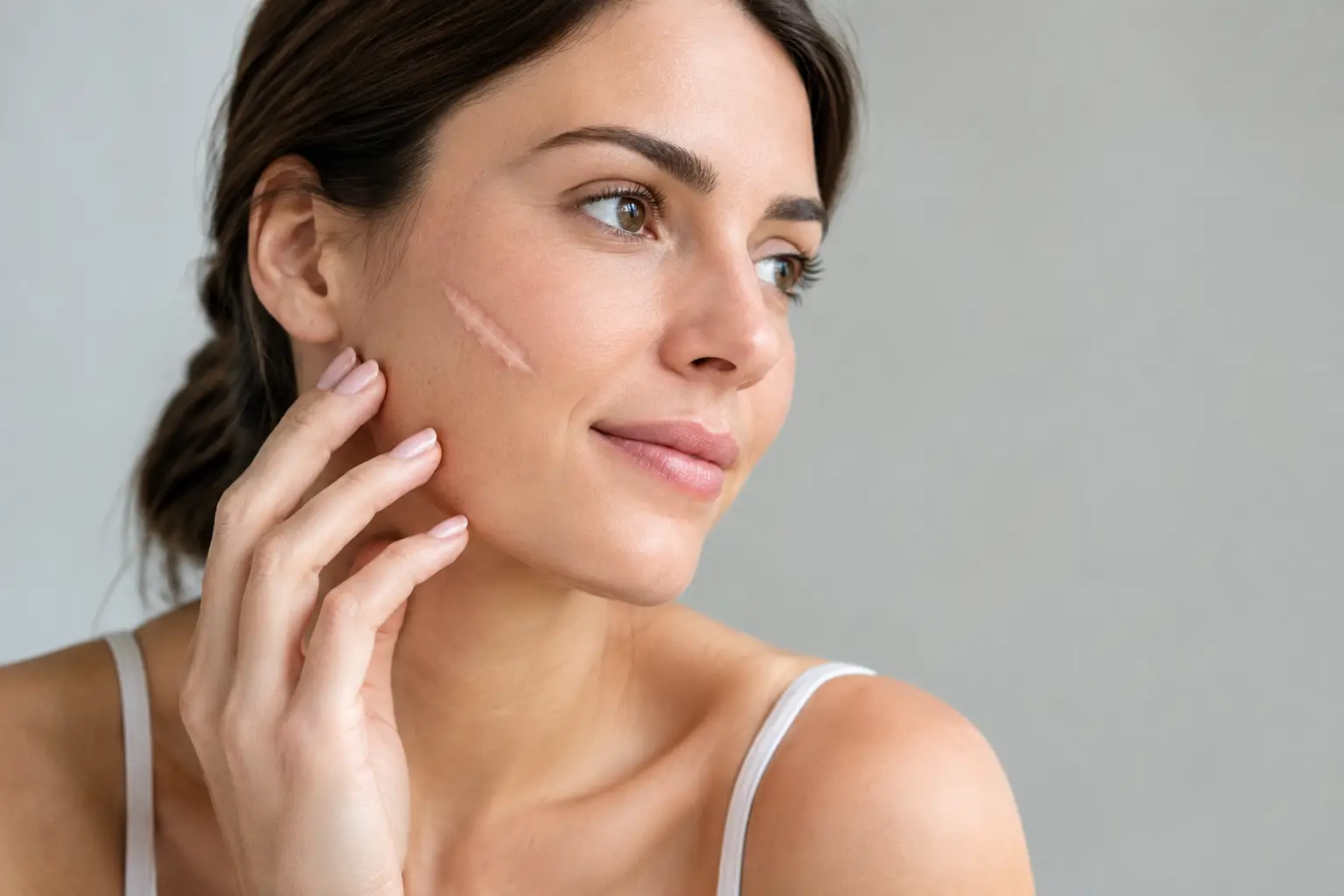
A white scar can draw attention precisely because it is lighter than the surrounding skin. It may sit flat and smooth yet remain highly visible, or it may have a raised, indented or tight texture that catches the light. The best options for white scars depend on more than their location. Their age, depth, cause, healing history, skin sensitivity and contrast with your natural skin tone all influence which approach is likely to create the most natural-looking improvement.
For many people, the concern is not simply the scar itself. It is the hesitation before wearing a sleeveless top, going to the beach, attending a professional event or seeing the area in photographs. A considered treatment plan should acknowledge that emotional impact while remaining realistic about what scar correction can achieve. The aim is usually to soften contrast, improve texture where possible and help the area blend more comfortably with the surrounding skin.
Why do scars turn white?
White scars are often described as hypopigmented scars. They develop when the healing process produces less melanin, the pigment responsible for skin colour, than the surrounding skin. This can happen after surgery, an injury, burn, acne lesion or previous skin treatment. Some scars become pale as they mature, particularly once the initial redness has faded.
A white scar is not always inactive or fully settled. It may still feel firm, tight, itchy or uneven, especially if it is relatively new. Conversely, an older scar may be stable in texture but have persistent pigment loss. These differences matter because colour camouflage alone may not be the right starting point for a scar with raised edges, indentation, sensitivity or ongoing change.
Sun exposure can make the contrast more noticeable. Surrounding skin may tan while the scar does not, creating a sharper colour difference. Consistent sun protection is therefore a practical part of managing white scars, both before and after professional treatment.
The best options for white scars begin with assessment
There is no single treatment that suits every pale scar. A careful consultation should consider whether the main concern is colour, texture, tightness or a combination of all three. It should also assess the scar’s stability, previous treatments, tendency to form keloids or hypertrophic scars, medical history and how your skin has healed in the past.
A scar needs to be sufficiently healed before pigment work is considered. In many cases, this means waiting until it is no longer red, actively changing or medically tender. The appropriate timing varies, so an individual assessment is safer than following a fixed timeline seen online.
Skin tone is equally important. The goal is not to make a scar disappear under a block of pigment. It is to create a softened, believable transition between the scar and the surrounding skin. This requires custom colour selection, conservative layering and an understanding that skin changes over time with sun exposure, hormones and natural ageing.
Scar camouflage tattooing for colour contrast
For stable white scars with relatively even texture, paramedical scar camouflage tattooing can be one of the most effective options. It uses carefully selected medical-grade pigments to reduce the visible contrast between the pale scar and the adjacent skin. Unlike decorative tattooing, the work is highly controlled and designed to mimic the visual character of natural skin rather than create a solid, obvious colour field.
This option is often considered for surgical scars, injury scars, burn scars and certain stretch marks. It can be particularly helpful where a scar is fully healed but lacks pigment and remains noticeable despite otherwise good texture.
The process typically requires more than one session. Fresh pigment can appear stronger during early healing, then settle as the skin recovers. A practitioner may build colour gradually across appointments rather than attempting a full correction in one treatment. This conservative approach allows the tone to be adjusted with greater precision and supports a more natural outcome.
Camouflage has limitations. Pigment cannot reliably correct a deep indentation, a raised edge or significant scar tightness on its own. It also will not tan in exactly the same way as surrounding skin. A skilled practitioner will discuss these factors honestly, including whether seasonal differences in skin colour may affect the final blend.
When camouflage may not be the first step
If a scar is thick, uneven, newly healed, prone to inflammation or still changing, pigment implantation may be postponed. Treating the skin quality first can create a better foundation for later colour work. This is especially relevant for scars that feel dense, irregular or noticeably reflective under light.
Inkless scar revision for texture support
Inkless scar revision is designed to focus on the skin’s texture rather than depositing colour. Using controlled needling techniques and specialised topical formulations, treatment aims to support the skin’s natural repair response and encourage collagen remodelling. For suitable clients, it may help soften the appearance of scar tissue, reduce the look of fine textural irregularities and improve how the scar receives light.
This approach may be useful for pale scars that are indented, uneven or surrounded by altered skin texture. It is also commonly considered for stretch marks, pitted acne scarring and older scars where improving the surface is an important part of the overall result.
Results develop gradually because collagen remodelling takes time. Multiple sessions may be recommended, spaced to allow for healing and assessment. While no treatment can promise to restore untouched skin, a series of carefully planned treatments may make a scar less visually prominent and may improve the eventual result of camouflage tattooing if that is still desired.
LED light therapy and cold plasma as supportive care
Regenerative skin therapies may be included in a personalised scar plan when the focus is skin quality, recovery support or sensitivity management. LED light therapy uses specific wavelengths of light as a non-invasive supportive treatment. It can be a gentle option for clients who want to support the skin’s healing environment without aggressive procedures.
Cold plasma therapy may also be considered for appropriate skin concerns, particularly where a practitioner is seeking to support surface renewal and overall skin condition. Whether these treatments are suitable depends on the scar, skin sensitivity and treatment history. They are not replacements for pigment correction where pigment loss is the primary concern, but they can have a role in a broader, staged plan.
The benefit of combining approaches is not that every scar needs every treatment. It is that colour and texture can be addressed in the right order, rather than expecting one procedure to solve every visible feature of a scar.
What to expect from a professional treatment plan
A quality scar correction plan begins with clear expectations. Photographs may be used to track change over time, and a patch test may be appropriate before pigment work, particularly for sensitive skin or more complex colour matching. You should be told how many sessions may be needed, what healing can look like and when it is sensible to reassess.
Aftercare matters. The treated area may need to be kept clean, protected from friction and shielded from sun exposure while it heals. Picking, exfoliating too early or returning to intense exercise before advised can interfere with recovery. Your practitioner should provide written guidance specific to the treatment performed and remain available if you have concerns during healing.
It is also reasonable to ask about sterile processes, pigment quality, training and experience with scars similar to yours. Scar tissue behaves differently from unaffected skin, so specialist knowledge is not an optional extra. It is central to safe treatment planning.
Choosing the right option for your scar
If your scar is pale but smooth and stable, camouflage tattooing may offer the most direct improvement in visible contrast. If it is white and texturally uneven, inkless revision or another texture-focused approach may be recommended before camouflage. If the skin is sensitive, reactive or still settling, a gentle supportive protocol and more time may be the most appropriate path.
At Scarless Artistry, treatment planning is consultation-led because the right result is personal. The objective is not to chase a perfect promise. It is to create a considered, natural-looking improvement that respects your skin, your healing history and the way you want to feel in it.
A white scar does not need to dictate what you wear or how visible you feel. With a careful assessment and a treatment approach matched to the scar itself, many people can move towards softer contrast, improved texture and renewed confidence at their own pace.