Can Tattoos Cover Raised Scars? What to Know
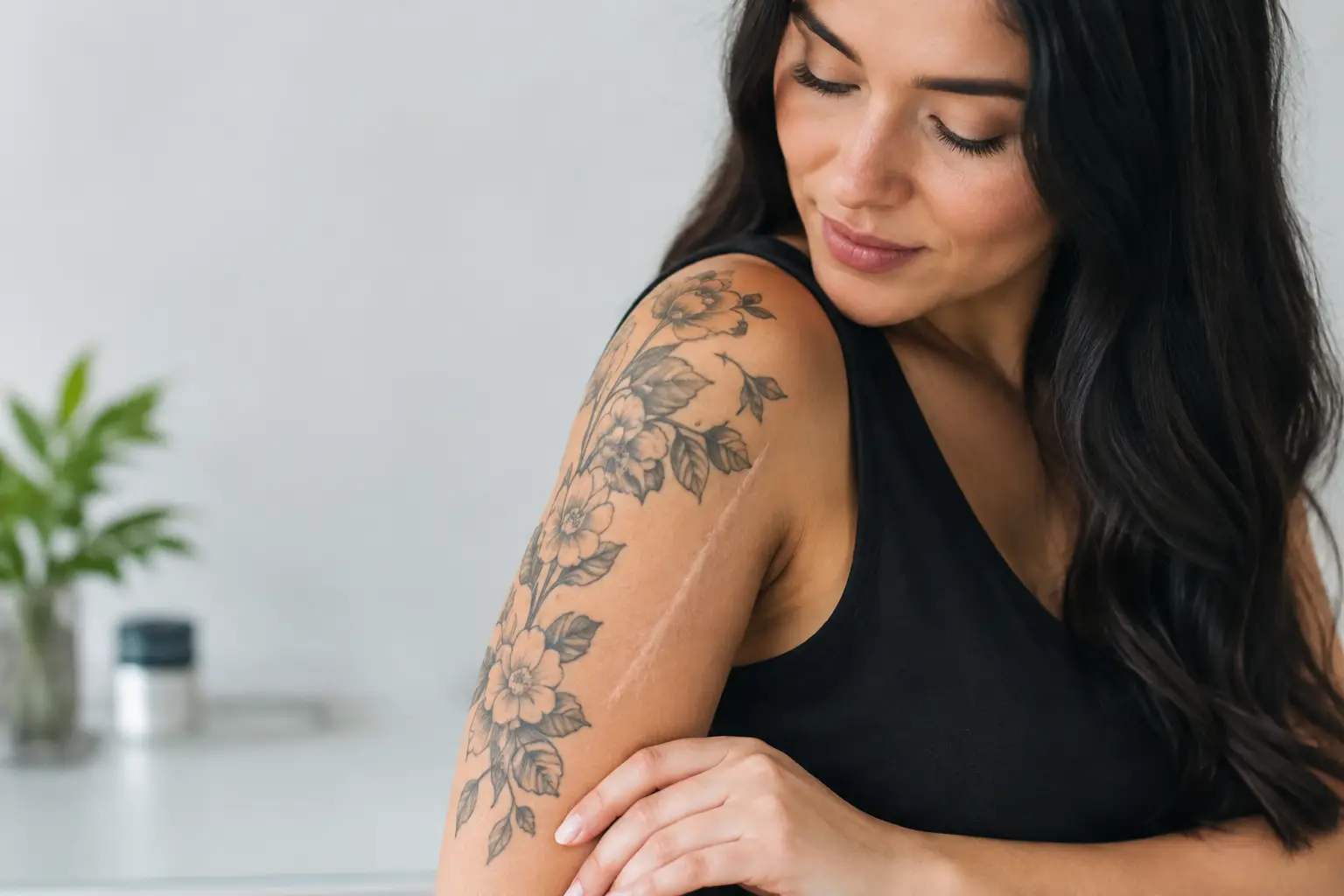
A scar can hold far more than a change in the skin. It may be a reminder of surgery, an accident, a burn, or a difficult period of healing. So, can tattoos cover raised scars? Sometimes, but the safest and most natural-looking answer depends on the scar’s texture, stability and history, not simply its location or colour.
A raised scar needs a more considered approach than a flat, pale scar. While pigment-based scar camouflage can reduce noticeable colour contrast, tattooing cannot flatten a scar by itself. For many people, the best outcome comes from first improving the quality of the skin, then assessing whether camouflage tattooing is appropriate.
Why raised scars need a different approach
Raised scars usually fall into two broad groups: hypertrophic scars and keloid scars. A hypertrophic scar stays within the boundary of the original wound but sits above the surrounding skin. It may feel firm, tight, itchy or sensitive, particularly in the earlier stages of healing. Some hypertrophic scars gradually soften and settle over time.
Keloid scars extend beyond the original wound edge and can continue growing. They are more likely to recur after skin trauma, including needling or tattooing. This is why a history of keloid scarring changes the conversation completely. Introducing a needle to keloid-prone skin may trigger further scar activity, even when the intention is cosmetic camouflage.
A scar may also be raised because it is still healing, inflamed or under tension. Surgical scars across the chest, shoulders, upper back and joints can be particularly unpredictable. These areas move frequently and are more prone to thicker healing.
The key point is that a raised scar is not automatically unsuitable for treatment. It simply requires a scar-focused assessment rather than a standard tattoo appointment.
Can tattoos cover raised scars with natural-looking results?
When a raised scar is fully mature, stable and medically suitable, carefully placed pigment may help it blend more softly into the surrounding skin. This is often called scar camouflage tattooing or paramedical tattooing. The aim is not to draw attention to the scar with decorative artwork. It is to reduce the visual contrast that makes the area stand out.
A skilled practitioner custom-matches pigment to the skin’s undertones and works conservatively. In suitable cases, this can make a pale, flat or slightly raised scar less immediately noticeable from a normal social distance. It may be especially helpful where a scar has healed lighter than the surrounding skin.
However, camouflage does not remove shadowing created by height, nor does it erase a scar’s texture. If the scar catches the light differently, feels ropey, or has sharply raised edges, pigment alone may not produce the result you are hoping for. In fact, treating colour before addressing the texture can sometimes make an uneven surface more apparent.
This is where realistic planning matters. The goal is softened visibility and greater confidence, not the promise of flawless, untouched skin.
When tattooing should be delayed or avoided
Timing protects both the skin and the final result. Most scars need at least 12 months to mature, although some require longer. A scar may look closed on the surface while deeper remodelling is still occurring. Tattooing too early can disturb the healing process, lead to uneven pigment retention or create further irritation.
Treatment should usually be postponed if the scar is red, warm, itchy, painful, thickening, actively changing or prone to breakdown. The same applies if there is infection, dermatitis, sunburn or a recent procedure in the area. People using medications that affect healing, immune function or blood clotting should discuss this during their consultation and seek medical advice where appropriate.
Known keloid scarring deserves particular caution. A dermatologist or treating doctor may need to guide the decision, and in some cases tattooing is not recommended at all. A responsible practitioner will not treat a scar simply because it is old. They will consider how that individual skin has behaved after previous injury.
Improving texture before considering camouflage
For raised scars, a staged plan often makes more sense than going straight to pigment. The first stage focuses on encouraging a calmer, more even skin surface. Depending on the scar and your health history, this may include professional scar revision approaches, regenerative needling techniques, LED light therapy or cold plasma support.
These treatments are selected to support collagen remodelling, soften scar edges and improve the way the scar reflects light. Results vary because every scar has a different depth, age, cause and healing pattern. A newer hypertrophic surgical scar, for example, will be approached differently from a decades-old burn scar or a scar that repeatedly thickens.
Once the texture has become more stable, pigment matching can be reviewed. Some clients find that improving the scar’s softness and colour transition is enough. Others choose medical tattooing as the finishing step to create a more balanced overall appearance.
At Scarless Artistry, this staged thinking is central to personalised scar correction. It avoids treating every concern as a pigment problem when the skin may first benefit from texture-focused care.
What a safe scar camouflage assessment looks like
A proper consultation should involve more than choosing a pigment shade. Your practitioner needs to assess the scar under good lighting, feel its texture where appropriate and ask about how it healed. Details such as the original injury, surgery date, previous treatments, sensitivity, medications, allergies and any personal or family history of keloids can affect suitability.
Skin tone also matters. Matching the visible surface colour without accounting for warm, cool or olive undertones can leave camouflage looking flat or mismatched. Pigment changes slightly as it heals, so a conservative approach is generally safer than trying to achieve full coverage in one session.
A test patch may be recommended for some clients, particularly where skin is sensitive, scar tissue is unpredictable or there is uncertainty around pigment retention. This small step can provide useful information before a larger treatment area is considered.
You should also receive clear aftercare guidance. Scarred skin can heal differently from unaffected skin, and following aftercare instructions helps minimise unnecessary irritation. Protecting the area from friction, picking, intense heat, swimming during the initial healing period and sun exposure supports more predictable healing.
What to expect from the treatment process
Scar camouflage is rarely a one-visit solution. Sessions are usually spaced apart to allow the skin to heal and for the true pigment result to develop. Freshly implanted pigment often appears stronger at first, then softens as the skin settles. The final healed tone is what guides any adjustment at the next session.
Sensitivity varies. Some scar tissue has reduced sensation, while other scars are tender or reactive. Gentle technique, sterile processes and carefully selected medical-grade pigments are essential, but comfort can never be assumed. Communicating openly during treatment allows the plan to be adapted to your skin’s response.
Long-term maintenance may also be needed. Skin naturally changes with sun exposure, hormones, ageing and tanning, while pigment can fade gradually. A touch-up is not necessarily a sign that treatment has failed. It can be part of maintaining a natural colour balance over time.
Questions worth asking before you proceed
Ask whether your scar appears mature and stable enough for tattooing, whether its raised texture is likely to affect the visual result, and whether you have any warning signs for keloid activity. It is also sensible to ask how many sessions may be needed, what healing looks like between appointments and what result is realistically achievable on your particular skin tone.
Be cautious of anyone who guarantees complete scar removal, promises to tattoo a fresh or actively raised scar, or treats all scar types in the same way. Scar correction is specialised work. The safest plan respects the biology of healing as much as the appearance of the skin.
A raised scar does not have to dictate how visible you feel every day. With patience, informed assessment and a treatment plan built around your skin rather than a generic solution, it may be possible to soften its appearance while caring properly for the tissue beneath it.