Can You Tattoo Over Scars? Everything You Need to Know Before Treatment
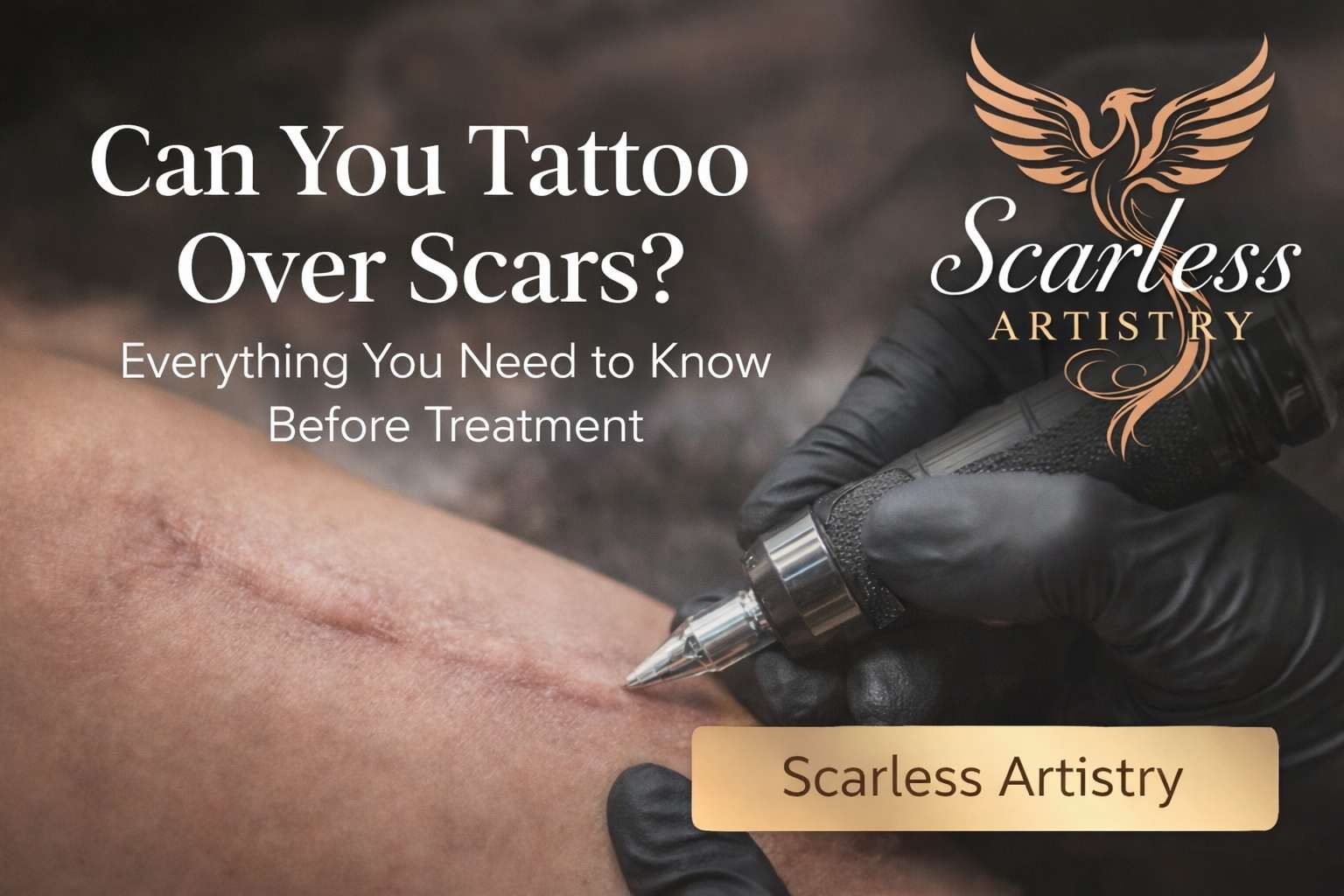
Scars are a normal part of healing, but many people feel self-conscious about them. Scars can come from surgery, burns, acne, injuries, or stretch marks. Because of this, many people ask the same question:
Can you tattoo over scars?
The simple answer is yes — in many cases you can tattoo over scars. However, it depends on the type of scar, how well it has healed, and the skill of the professional doing the treatment.
In this guide, we will explain how tattooing over scars works, when it is safe, and what options are available if you want to reduce the appearance of scars.
What Does “Tattoo Over Scars” Mean?
Tattooing over scars means placing pigment into the skin to help hide or blend the scar. Some people choose decorative tattoos, while others choose medical or paramedical tattooing that matches the color of their skin.
Unlike regular tattoos, scar camouflage tattooing focuses on blending the scar into the surrounding skin tone instead of creating a visible design.
At clinics like Scarless Artistry, trained professionals use special pigments and techniques designed specifically for scar treatment. These methods help the scar appear softer and less noticeable.
Can All Scars Be Tattooed Over?
Not every scar is the same. Some scars respond well to tattooing, while others may need a different treatment.
Here are the most common types of scars.
1. Flat or Mature Scars
These scars are usually the easiest to treat. They are flat, pale, and fully healed.
Most professionals recommend waiting 12–18 months after an injury or surgery before tattooing over a scar to allow the skin to fully heal.
2. Atrophic Scars
These scars sit below the skin’s surface. Acne scars and stretch marks often fall into this category.
Tattooing can work on these scars, but the skin may hold pigment differently than normal skin.
3. Hypertrophic Scars
These scars are raised but stay within the boundary of the wound. They may be tattooed once they are fully healed and flattened.
4. Keloid Scars
Keloid scars are thick scars that grow beyond the original injury. Tattooing these scars can sometimes make them worse, so medical advice is important before treatment.
A professional consultation helps determine the best option for your skin.
How Tattooing Over Scars Works
Scar tissue is different from normal skin. It may be thicker, uneven, or more sensitive.
When tattooing over scars, professionals must adjust their technique to work with the scar tissue.
The process usually includes:
- Skin assessment: A specialist checks the scar’s texture, age, and color.
- Pigment matching: Skin-tone pigments are carefully mixed to match your natural skin color.
- Gentle tattooing technique: Pigment is placed into the skin slowly and carefully to avoid irritation.
- Multiple sessions if needed: Because scar tissue absorbs pigment differently, two or more sessions may be required.
Scar tissue may also hold pigment unevenly, which is why experienced specialists are important.
Does Tattooing Over Scars Hurt?
Many people worry about pain. The truth is that everyone experiences tattooing differently.
Some people say tattooing over scars is more sensitive, while others feel very little pain.
This happens because scar tissue can have damaged or irregular nerve endings.
Most clinics use topical numbing cream to make the treatment more comfortable.
At Scarless Artistry, comfort and safety are always a priority during scar treatments.
Benefits of Tattooing Over Scars
Tattooing over scars can help improve confidence and appearance.
Some of the main benefits include:
Improved Appearance
Tattoo pigments can blend scars with surrounding skin tones, making them less visible.
Boosted Confidence
Many people feel more comfortable wearing short sleeves, swimsuits, or other clothing after treatment.
Long-Lasting Results
Scar camouflage results can last several years, depending on skin type and sun exposure.
Non-Surgical Solution
Unlike surgery, scar camouflage treatments are minimally invasive.
Risks of Tattooing Over Scars
Like any skin treatment, tattooing over scars has some risks.
These may include:
Uneven pigment absorption: Scar tissue may not hold ink evenly.
Increased sensitivity: Scarred skin can sometimes be more sensitive.
Infection risk: Any tattoo procedure requires sterile conditions and proper aftercare.
Scar irritation: In rare cases, tattooing may irritate or worsen certain scars.
This is why choosing a qualified specialist is extremely important.
When Should You Avoid Tattooing Over Scars?
You may need to delay or avoid tattooing if:
- The scar is still healing
- The scar is red or inflamed
- You have active skin conditions
- The scar is a growing keloid
- Your doctor advises against it
A professional assessment will help determine whether tattooing is safe for your skin.
Alternative Treatments for Scar Improvement
Tattooing is not the only option for scar treatment. Some scars respond better to other procedures.
One popular option is inkless scar revision, which improves the skin’s texture without using pigment.
This treatment stimulates collagen and elastin to help the skin heal naturally.
You can learn more about this treatment here: Inkless Stretch Mark & Scar Revision
This method is especially helpful for stretch marks and uneven skin texture.
Scar Camouflage vs Traditional Tattoos
Many people confuse scar camouflage with regular tattoos.
But they are very different.
Regular tattoos:
- Use artistic designs
- Focus on decorative artwork
- Use deeper ink placement
Scar camouflage tattoos:
- Use skin-colored pigments
- Blend scars into surrounding skin
- Focus on natural-looking results
If you want a natural look instead of artwork, scar camouflage treatments may be the better option.
Learn more here: Scar Camouflage Tattoos
What to Expect During a Scar Camouflage Consultation
If you are thinking about tattooing over scars, a consultation is the first step.
During the consultation, a specialist will:
- Examine your scar type and age
- Discuss treatment options
- Match pigments to your skin tone
- Explain the number of sessions needed
- Provide aftercare instructions
Every scar is unique, so treatment plans are always customized.
How Long Do Results Last?
Scar camouflage results are long-lasting but not always permanent.
Most results last 3–5 years, depending on factors such as:
- Skin type
- Sun exposure
- Lifestyle
- Aftercare
Occasional touch-ups help maintain the most natural appearance.
Is Tattooing Over Scars Worth It?
For many people, the answer is yes.
Tattooing over scars can help reduce the visibility of scars and restore confidence.
However, the best results happen when:
- The scar is fully healed
- The treatment is done by a trained professional
- The right technique is used
That is why choosing a specialist clinic with experience in scar treatments is so important.
Tattoo Over Scars in Sydney
If you live in Sydney and want to reduce the appearance of scars, professional scar camouflage treatments can help.
At Scarless Artistry, treatments are designed to blend scars naturally with your skin tone using advanced paramedical tattoo techniques.
Each treatment is personalized based on your skin type, scar condition, and desired results.
Conclusion
So, can you tattoo over scars?
In many cases, yes. But success depends on the scar type, healing stage, and the expertise of the professional performing the treatment.
If you want a natural-looking solution, scar camouflage tattooing or inkless scar revision may help improve the appearance of scars safely.
A professional consultation will help you choose the treatment that is right for your skin.
Frequently Asked Questions About Tattoo Over Scars
1. Can tattoos completely remove scars?
No. Tattoos cannot remove scars, but they can make them less visible by blending them with the surrounding skin.
2. How long should I wait before tattooing over a scar?
Most professionals recommend waiting at least 12 months after the scar has healed before tattooing.
3. Are scar camouflage tattoos permanent?
Results usually last 3–5 years, but touch-ups may be needed over time.
4. Can stretch marks be tattooed?
Yes. Many stretch marks can be treated with scar camouflage or inkless scar revision.